The key points that Jenkins mentions were about convergence, black box, and participatory culture. I think its interesting how Jenkins talks about how players are becoming participators and participators are becoming players now. There is no one sole role for each. Basically thats participatory culture. Each of us can have our own say, opinion, way we view things and help each other. In media today there is no black box now, we are moving towards convergence. Uniformity if you will with different characters, kind of like how Weingberger talked about the miscellaneous. For example you can be a writer, a publisher, a spectator, and more on the web. The internet is not a black box or a delivery technology. It is the understanding that all media is always changing, its right in front of us on the internet. The way marketing, communication, and other technologies is changing, he talks about how we have to keep up. And for the businesses who don't want to try and stay in the game, they will be left in the dust. This new folksonomy is the future. Whether or not we are ready for the change is clear. We are not, but it will take some time and he talks about how we have the choices to sort through these many uncertainties.
Splashy pants story was crazy haha, and I always wear old spice, even before the commercials =)
Sunday, February 20, 2011
Monday, February 7, 2011
Blog #5
Weinberger, relying on German philosopher Heidegger, says that "the meaning of a particular thing is enabled by the web of implicit meanings we call the world"
Basically what I got out of the reading was that the philosophers example about the hammer. If you didn't know what the hammer was used for, you wouldn't know its meaning. Also he talks about its relationship to wood, trees, all the way up to the sun. To the sound it makes when hitting a nail to how humans need it to build and are not gods. He makes it very clear that to understand the hammer, you have to understand much much more. And what Weinberger is trying to say is that all the implied meanings that we put on the web and all the relationships/tagging, gives our world meaning.
This is related to the third order in that we are giving more information, more relationships, more insight to the web. We can't just look at dictionary.com anymore for meanings, we can look elsewhere, to blogs, articles, photos, even youtube clips. Basically we are not limited to one source, to one type of meaning, we have everyone pitching in to help each other.
Mobb Deep - back at you
Tuesday, February 1, 2011
The Jungle Book
In what Wienberg says in chapter 5, the law of the jungle, he goes on about how what we use to do back then is changing in ways that would have been impossible to think of back then. No one thought our advances in the internet, knowledge managing, and communicating would get this far, but it has, and it will keep advancing at the pace we are going.
For example, back in the day, for a artist to get well known, they would have to be the lucky ones. I'm not saying that all the famous singers right now are just lucky, of course they have talent, but think about it, there are so many people out there that we never herd of that could probably sing as good or better.
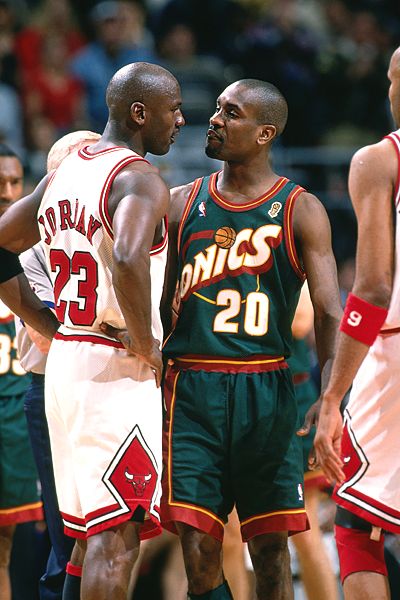
A line from one of Jadakiss's songs titles Why, he says this "Why is a brother up North better than Jordan That didn't get that break." And I don't want to take away from Jordans glory, but Jadakiss could be right. A singer right now was found on youtube and just got signed, Alyssa Bernal. Its so easy to scout for talent now. We went from scouting events to just going online and searching for it. I believe that Web 2.0 and having youtube being so miscellaneous was Alyssas break.
I saw a connection in what Wienberg was saying and what Tim O'Reilly has said in his "what is Web 2.0" article. The connection was how Tim was talking about how other applications evolved into web 2.0, like for example mp3.com to napster, or personal website to blogging. I thought of this when I was reading what Wienberg was saying about how being miscellaneous is how these new web 2.0s got big in the first place. It makes sense, I'm sure that the New York Times are still read a lot even online, but when Wikipedia was being read more then that, you know that being miscellaneous is the right way to go.
"Many people now understand this idea in the
sense of “crowdsourcing,” meaning that a large group
of people can create a collective work whose value
far exceeds that provided by any of the individual
participants."
This quote is from the article Web squared, and it reminded me of how Wienberg was talking about gatekeepers. That was the limitation of having experts going through all the papers and choosing which ones would make the cut to get published. But just like what Tim said, "Users add value," and being able to post everything online is catering to everyone online. Its so easy, and its using the "long tail" really well that Chris Anderson talks about because the chances of someone being interested in your post, tagged photo, and other things is very high, even if its just one more person.
For example, back in the day, for a artist to get well known, they would have to be the lucky ones. I'm not saying that all the famous singers right now are just lucky, of course they have talent, but think about it, there are so many people out there that we never herd of that could probably sing as good or better.
A line from one of Jadakiss's songs titles Why, he says this "Why is a brother up North better than Jordan That didn't get that break." And I don't want to take away from Jordans glory, but Jadakiss could be right. A singer right now was found on youtube and just got signed, Alyssa Bernal. Its so easy to scout for talent now. We went from scouting events to just going online and searching for it. I believe that Web 2.0 and having youtube being so miscellaneous was Alyssas break.
The good ol days haha
I saw a connection in what Wienberg was saying and what Tim O'Reilly has said in his "what is Web 2.0" article. The connection was how Tim was talking about how other applications evolved into web 2.0, like for example mp3.com to napster, or personal website to blogging. I thought of this when I was reading what Wienberg was saying about how being miscellaneous is how these new web 2.0s got big in the first place. It makes sense, I'm sure that the New York Times are still read a lot even online, but when Wikipedia was being read more then that, you know that being miscellaneous is the right way to go.
"Many people now understand this idea in the
sense of “crowdsourcing,” meaning that a large group
of people can create a collective work whose value
far exceeds that provided by any of the individual
participants."
This quote is from the article Web squared, and it reminded me of how Wienberg was talking about gatekeepers. That was the limitation of having experts going through all the papers and choosing which ones would make the cut to get published. But just like what Tim said, "Users add value," and being able to post everything online is catering to everyone online. Its so easy, and its using the "long tail" really well that Chris Anderson talks about because the chances of someone being interested in your post, tagged photo, and other things is very high, even if its just one more person.
Wednesday, January 26, 2011
Blog #3 Jan 26, 2011
What I talked about in my blog on Tuesday about organizing was movies and how me and my family organize our movies differently. Of course everyone in my family is open to each others movies, even I don't buy most of the movies I like, I wait till my family might be interested in it also because I'm a broke college student haha. Someone else could probably organize our movies by action, comedy, thriller, love, romantic comedies and the sorts. But when you think about this tree with branches, you can either lump up actions and thrillers together, or slice up action with comedy action or just comedies. Their are so many different ways of organizing movies. Its crazy. Of course organizing it in the tree branch kind of way is easier for everyone in the household to look for a certain type of a movie, IF you remember what the movie was about, what type of movie it was, and how it looks like. But in my family we watch movies over and over again, for me, I can watch Independence Day a lot haha. All I have to do is look up section and reach on the top left corner of the shelf, and there it is, independence DAY!!! HIP HOP HOORAY. But if someone else organized it differently, they could have that movie in a different place on th shelf because maybe there not tall enough, or its easier to access somewhere else. Maybe they don't watch that movie as much as I do and put it in a place where all the old movies go.
I think the way I organize my movies are basically lumping up all of my favorites I watch a lot, and leaving all the ones I rarely watch with my families organizations. And if I want to watch one of theirs, I ask them. This probably says that im selfish because I put my movies in the tallest part so I can reach them while others in my family cant really, "my step dad is shorter then me also and my mom is filipino haha." And It probably says I value my favorites a lot more then say blue rays or newer movies, because I'm broke and I cant even buy new movies a lot. And maybe I'am a pack rat, packing all in one section, but thats the easiest for me to remember. Its like a semi messy room, if someone else comes in and fixes it their way, you'l loose EVERYTHING. I don't mean to really loose it, but you'l have a hard time finding things that were yours that you use to find in a second. With that being said, I think everyones TREE looks differently, shape, length, height, everything. And whats better for me might not be better for you, but its all good, because we have the internet, and Google haha.
Tuesday, January 25, 2011
Everything is Miscellaneous, Wienberer, Prologue and chapters 1,2,3
First of all me start by saying that this reading was a lot of good haterade. Hopefully my readers know what that means haha. Basically David Weinberger goes on to just talk about how we do things now, and just say "no, dude there's an easier way to do that if you just stop being stubborn! For example in the prologue, he talks about Staples and how its all organized to better customers to find what they want. And he even interviews some of the workers like Mike Morgan for example and Liz McGowan. These people want us to find things with minimal steps, yet they order things to sell more faster, basically profit is what dominates this whole organization. They even put the dog treats lower on the shelves because kids are more likely to get their parents to buy them, and also handicapped customers in wheel chairs will have a hard time looking at shelves because they were built for people standing, looking eye to eye, basically taller then 4 ft high. So what does David say about this? Its all worthless, because now in the digital world, we don't have to be stuck looking for what we want, asking for it, annoyed at how long its taking us, it can only be a few clicks away. Everything doesn't need to be organized to be faster, because we all have our different wants and needs, everyone is not going to staples with the same grocery list.
In chapter 1 he also hates on some pretty big names. First of all the most important parts of chapter 1 I found was about the orders. Like how paper has limitations compared to the third order which is digital. Before labels had to be smaller then the thing they were labeling, but online labels can catalog, have a link, ratings, and so on. Way more then the old labels limited to paper. He talks about Bill Gates who wasted millions of dollars on building a way to preserve the Bettmann Archive. Which I thought was pretty funny because Bill Gates, seriously, as rich as you are? You cant come up with a better way to reach information on those photos? He talks about how long it takes if you wanted to look up a picture with a soldier on the battlefield eating, thats one pictured, but someone would have to take awhile to find that one picture. If he only labeled it better, like how we find things on the internet, and can actually see the picture of it without taking it out of its freezing state, it would be a lot easier to get to that information. He basically says that everything doesn't have to be so neat, so organized, that information that is messier in the way we put it could be easier for us, the customer, anyone to find what we need faster.
In chapter 2 David talks down alphabetization a lot. Man I hate typing that word haha. He simply puts that alphabetization isn't needed anymore. I mean back in the day it was heavenly, God wanted it. Its funny that Giovanni di Genoa wrote 400 pages explaining how to alphabetize haha. And he didn't do it alone. But back to the main point, basically saying screw alphabetization. Everything has its own places, not just one place, and we are smart enough now to get what we want without it.
As for organizing something in my life, I would have to say movies. Back home we watch movies a lot. Im not hardcore but we keep all the dvds in one section, blue rays in one, and vhs another section. I put all the ones I watch mostly in a corner of the top shelf of the dvd section. I got my favorites, animes, shows, and so on. My brother is more into the blue rays so he has his own section within that section. And everyone in the family knows their own spots where the movies are. We know when someone messes with them and doesnt put something back to haha, it gets bad. Looking for a movie sucks, especially when you really want to watch it, so bending over on ur knees looking through hella vhs sucks. Thats why most of the favorites are in the open, and i guess you can say Staple eye level haha. But im the tallest, and im left handed, so the top left handed corner of the shelf is all me =).
Monday, January 17, 2011
Web Sqaured (Web Meets World) dtc 356
I think the most important idea from this article was about the collection of data in real time. The example about how if one product isn't selling well, it would take 6 months before for the manufacturer in china to know this, but now it happens instantaneous. In my professional goals as to work for a certain business firm or gaming company making sure they are using all their information efficiently. Getting real time feed back will help greatly in fixing problems that would have taken longer in the past.
Flickr is probably one of the most exciting web apps that I have seen in the past year. Its crazy to think that all those images are from different people, cameras, taken at different times of the day and they still look amazing. And you can pin point individual points of the pictures and zoom into it, you can be anywhere in the world at your computer. I think it embodies what web 2.0 is all about, flickr is a collective community of users who share photos to create these massive 360 degree photos. Its simply amazing.
Subscribe to:
Posts (Atom)